
In the evolving landscape of cryptocurrency investments, Bitcoin spot Exchange Traded Funds (ETFs) emerge as a pivotal innovation, bridging the gap between traditional investment strategies and the digital asset realm. Unlike Bitcoin futures ETFs, which are based on the future price predictions of Bitcoin, spot ETFs track the cryptocurrency’s current market price. This distinction marks a significant shift, offering investors a more direct exposure to Bitcoin’s real-time value. Spot ETFs stand as a testament to the growing integration of cryptocurrencies into the mainstream financial ecosystem, promising a blend of familiarity for traditional investors with the dynamic allure of digital currencies.

Deep Dive into Bitcoin Spot ETFs
At its core, a Bitcoin spot ETF is designed to track the current price of Bitcoin, providing investors with an opportunity to gain exposure to its price movements without the complexities of directly owning the cryptocurrency. This is achieved by the ETF owning Bitcoin directly, and the value of the ETF shares fluctuates with the real-time price of Bitcoin in the market.
The mechanism of a Bitcoin spot ETF is relatively straightforward. It involves the ETF purchasing actual Bitcoin, which then underpins the value of the ETF shares. Investors who buy shares in the Bitcoin spot ETF are, in effect, buying a share of the fund’s Bitcoin holdings. This approach allows for direct exposure to the price movements of Bitcoin, mirroring its real-time market performance. Unlike futures ETFs, which are based on contracts speculating on the future price of Bitcoin, spot ETFs offer a more tangible link to the cryptocurrency’s current market value, making them a potentially more accurate reflection of Bitcoin’s market dynamics.
How to Invest in Bitcoin Spot ETFs
Investing in a Bitcoin spot ETF is a process familiar to anyone who has traded stocks or traditional ETFs. Here’s a step-by-step guide:
- Choose a Brokerage: Select a brokerage that offers trading in the specific Bitcoin spot ETF you are interested in. Consider factors like fees, platform usability, and customer service.
- Open and Fund Your Account: If you don’t already have a brokerage account, you’ll need to open one. This involves providing some personal information and funding your account, usually through a bank transfer.
- Research Bitcoin Spot ETFs: Before investing, research various Bitcoin spot ETFs to understand their performance, management fees, and other features.
- Place Your Order: Once you’ve chosen a Bitcoin spot ETF, place an order. You can opt for a market order (buying at the current market price) or a limit order (setting a specific price at which you’re willing to buy).
- Monitor Your Investment: After purchasing, keep an eye on your investment. The value of your Bitcoin spot ETF shares will fluctuate with the price of Bitcoin.
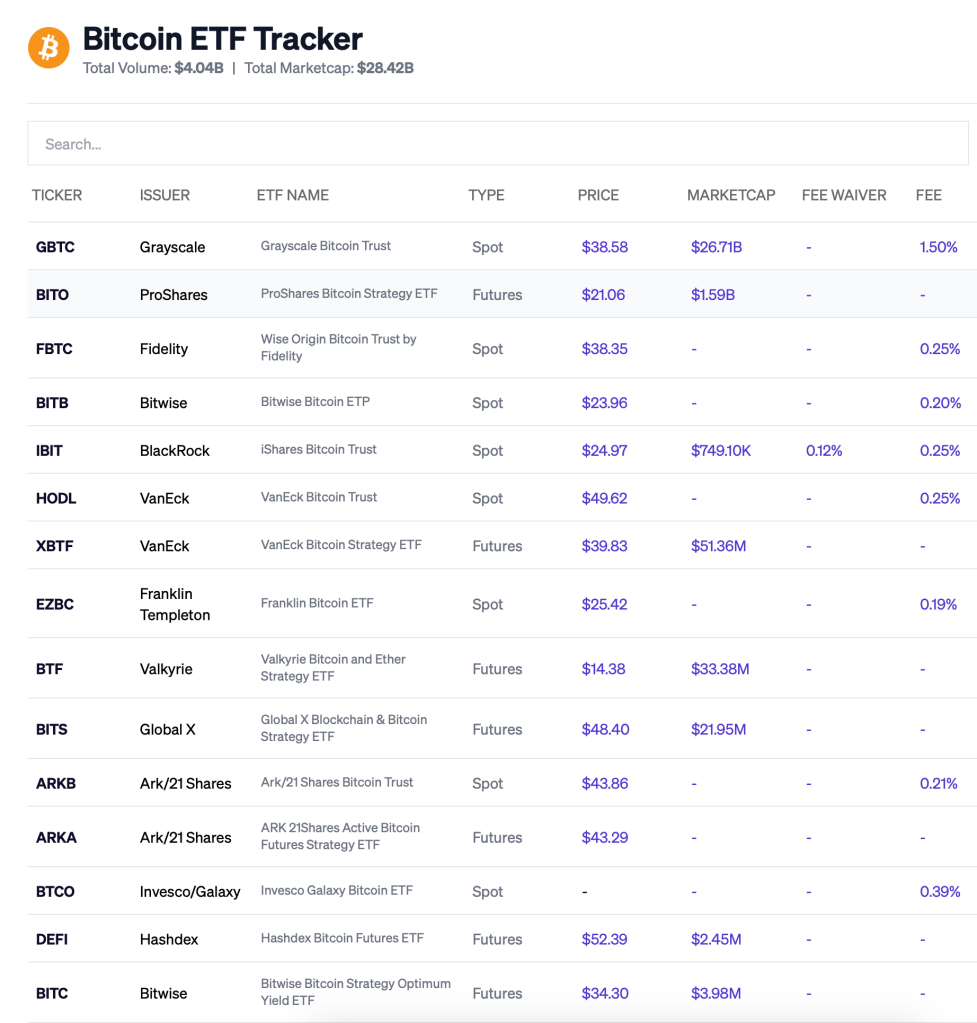
The first batch of BTC ETF has been approved. Are is the list as of January 2024 (Source clockworks.co)
Who Would Invest in Bitcoin Spot ETFs?
Bitcoin spot ETFs appeal to a wide range of investors, from institutions to retail individuals.
Institutional Investors: These include mutual funds, pension funds, and other large entities. They are often attracted to Bitcoin spot ETFs because of the regulated investment framework, ease of access, and the opportunity to diversify their portfolios without the complexities of handling cryptocurrency directly.
Retail Investors: Everyday investors find Bitcoin spot ETFs appealing because they offer a straightforward way to invest in Bitcoin without dealing with digital wallets or cryptocurrency exchanges. It also allows them
to invest in Bitcoin through a traditional brokerage account, making it accessible and familiar.
The Benefits and Risks
Benefits:
- Increased Accessibility: Bitcoin spot ETFs make investing in Bitcoin easier and more accessible for both individual and institutional investors. They eliminate the need for technical knowledge about cryptocurrency transactions and storage.
- Regulated Investment: ETFs are subject to regulatory oversight, offering a layer of security and legitimacy that direct cryptocurrency investments lack.
- Market Exposure: Investors get direct exposure to Bitcoin’s price movements, allowing them to benefit from its growth potential without owning the cryptocurrency.
- Portfolio Diversification: Bitcoin spot ETFs offer an alternative asset class for investors, aiding in portfolio diversification.
Risks:
- Market Volatility: Bitcoin is known for its price volatility. This risk is directly transferred to the Bitcoin spot ETF, impacting its value.
- Regulatory Changes: The cryptocurrency market is still maturing, and regulatory changes could affect the performance and legality of Bitcoin spot ETFs.
- Limited Track Record: Being a relatively new investment vehicle, Bitcoin spot ETFs lack a long-term performance history, making it difficult to assess future performance.
- Liquidity Concerns: Depending on the market conditions and the size of the ETF, there could be liquidity concerns affecting the ability to buy or sell shares quickly.
Conclusion
Bitcoin spot ETFs represent a significant development in the world of cryptocurrency investment. By offering direct exposure to Bitcoin’s price in a regulated, familiar format, they have the potential to transform Bitcoin investment, making it accessible to a broader range of investors. This could be a game-changer, not just for Bitcoin but for the entire landscape of digital assets, signaling a new era of integration between traditional finance and the evolving world of cryptocurrencies.
 MineDash
Leave a comment